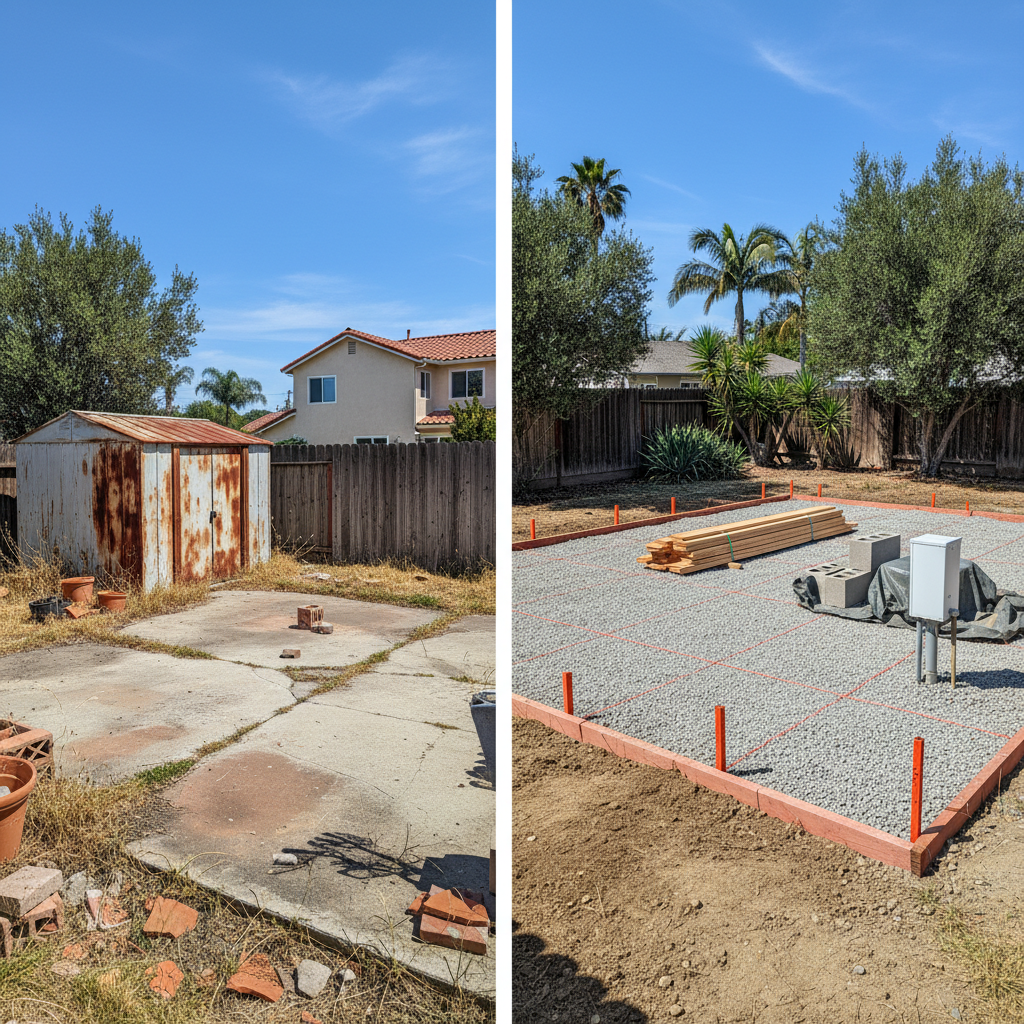
So, you're thinking about adding an ADU to your Long Beach property. That's awesome! It's a smart move for extra income, family space, or just boosting your property value. But before you get too far down the road dreaming about floor plans and finishes, you've gotta figure out if an ADU is even possible on your lot. That's where a site assessment comes in. And trust me, not all assessments are created equal. You've got two main ways to go about it: a quick, basic feasibility check or a more comprehensive, detailed site investigation.
The Basic Feasibility Check: A Quick Look Under the Hood
This is usually the first step for most folks, and it's a good place to start if you're just kicking the tires. A basic feasibility check is exactly what it sounds like: a quick look to see if your property has the fundamental requirements for an ADU. When I do these for clients, or when you're talking to a design-build firm like Infinity ADU, we're usually looking at a few key things:
- Zoning & Setbacks: Can you even build an ADU on your lot according to Long Beach's specific zoning codes? How close can it be to your property lines, your main house, or other structures? This is usually the first hurdle.
- Lot Size & Coverage: Is your lot big enough? Long Beach has rules about how much of your lot can be covered by buildings. We'll check if an ADU fits within those limits.
- Access: Can construction equipment get to the backyard easily? This might seem minor, but it can blow up your budget if we have to crane everything over your house.
- Preliminary Utility Check: Are there existing sewer, water, and electrical lines nearby? This isn't a deep dive, just a quick visual to see if it looks like a nightmare or a straightforward connection.
- Rough Cost Estimate: Based on these initial findings, we can usually give you a ballpark figure for the project. It's not exact, but it's enough to tell you if you're in the right financial neighborhood.
The cost for this kind of assessment is usually pretty low, sometimes even free if you're talking to a contractor who wants to earn your business. It's fast, too, often just a phone call and an hour on site. The downside? It's not super detailed. It won't uncover hidden issues like a buried oil tank (yeah, I've seen those in older Long Beach neighborhoods) or a tricky sewer line that needs a major reroute. It's great for ruling out properties that are clearly a no-go, but it won't give you all the answers.
The Comprehensive Site Investigation: The Deep Dive
Now, if the basic check looks good and you're serious about moving forward, this is where you want to go next. A comprehensive site investigation is a much more thorough look at your property, and it's absolutely crucial for avoiding expensive surprises down the road. This isn't just a contractor walking around; it often involves bringing in specialists.
- Detailed Topographical Survey: This maps out every contour of your land, existing structures, trees, utilities, and property lines. It's essential for accurate design and understanding drainage.
- Geotechnical Report (Soil Test): This is a big one, especially in areas like Long Beach where soil conditions can vary wildly, from sandy loam to more clay-heavy soils. You need to know what you're building on. This report tells us about soil stability, bearing capacity, and potential issues like liquefaction. It's critical for foundation design and durability.
- Utility Verification: This goes beyond a quick look. We're talking about calling in utility companies, potentially doing camera inspections of sewer lines, and verifying electrical panel capacity. You don't want to find out during construction that your main house panel can't handle the extra load from an ADU.
- Drainage Analysis: How does water flow on your property? An ADU needs proper drainage to prevent issues with the foundation and surrounding landscape.
- Tree & Root Analysis: Large trees, especially mature ones common in neighborhoods like Belmont Heights, can have extensive root systems that interfere with foundations or utility lines. You need to know if they're going to be an issue.
This deep dive costs more, no doubt. You're paying for surveys, engineering, and specialist reports. It can range from a few thousand dollars up to five figures, depending on how complex your site is. It also takes more time, often several weeks to get all the reports back. But here's the thing: this investment upfront can save you tens of thousands of dollars, or even prevent a project from stalling completely, during construction. Finding out you need a deep foundation because of poor soil *before* you've poured concrete is a lot cheaper than after.
My Recommendation: Start Basic, Then Go Deep
Here's how I usually advise homeowners in Long Beach: start with the basic feasibility check. It's low-cost, low-commitment, and will quickly tell you if your ADU dream is even remotely possible. If that initial check comes back positive and you're feeling good about moving forward, then absolutely invest in the comprehensive site investigation. Don't skip it. It's like getting a full physical before running a marathon. You want to know what you're dealing with.
The durability of your ADU, its long-term maintenance, and even its final appearance are all heavily influenced by what's happening underground and around it. A well-designed foundation based on solid soil data means an ADU that stands strong for decades. Knowing where all your utilities are means a smoother, faster build with fewer unexpected trenches or reroutes. It's all about minimizing risk and maximizing the value of your investment.
Ultimately, an ADU is a significant addition to your home. Doing your homework upfront with a thorough site assessment is one of the smartest things you can do to ensure a successful project. You wouldn't build a house on quicksand, right? Don't build your ADU without knowing what's underfoot.