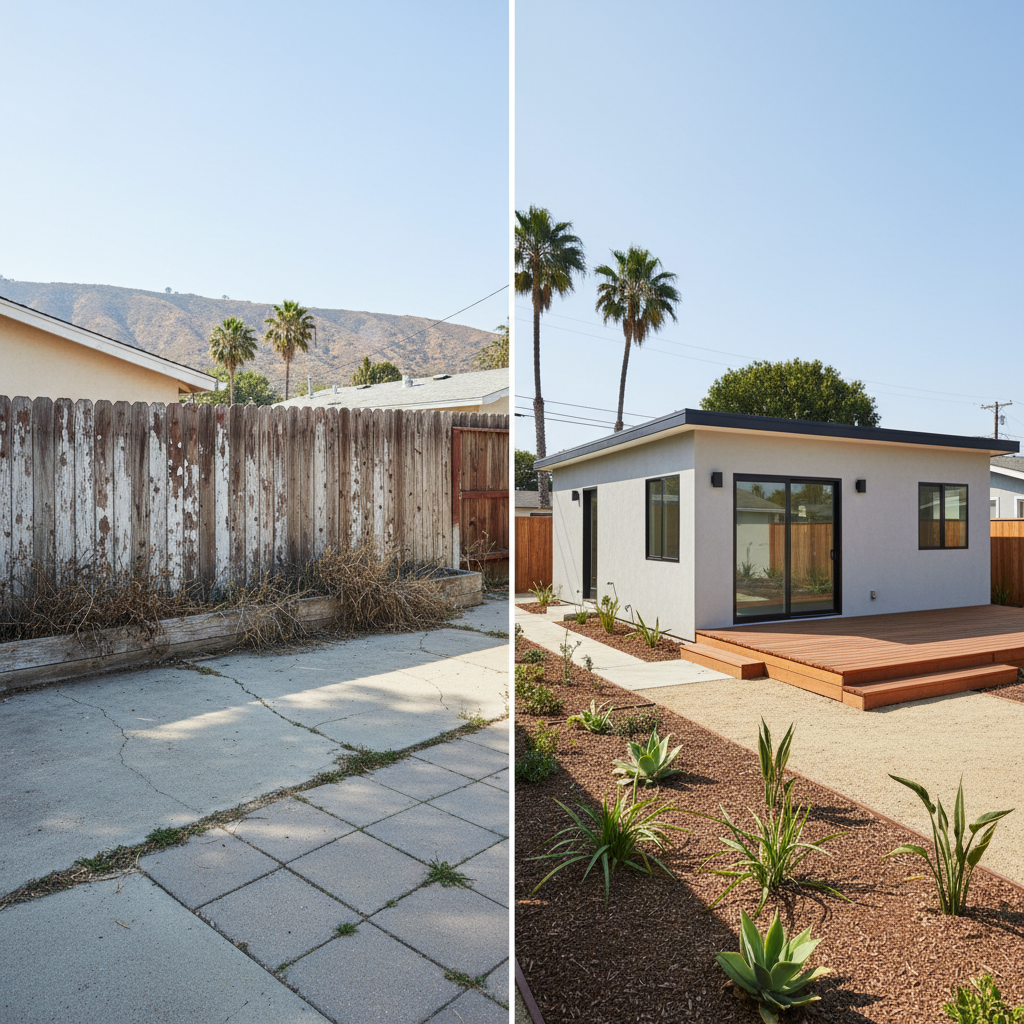
Alright, so you're thinking about adding a detached ADU to your place here in Long Beach. Smart move, truly. It's a fantastic way to boost your property's value and give you some extra wiggle room. But once you've settled on 'detached,' the next big question usually pops up: should I go with a traditional stick-built ADU, or check out a prefabricated (prefab) unit instead?
It's a common puzzle, and honestly, I see people wrestling with it all the time. There's no single 'right' answer for everyone, but I can tell you what I've picked up working on these projects all over Long Beach – from the charming Craftsman homes in Belmont Heights to the cozy bungalows in Rose Park.
What's the Real Difference?
When I say 'stick-built,' I'm talking about what you probably imagine when you picture construction. We're building it right there on your property, piece by piece, just like a regular house. First, the foundation goes in. Then we frame it, put on the roof, run the plumbing, do the electrical — all of it happens right there on your lot.
'Prefab,' on the other hand, means it's built in a factory, often in modules, and then gets trucked to your site. We'll still need to get your site ready, pour a foundation, and then assemble the pieces. Once it's set, we connect all the utilities and finish up any exterior or interior details that couldn't be done back at the factory.
Cost: Where Does the Money Go?
This is usually the first thing people ask about, naturally. On the surface, prefab ADUs often look cheaper. And they can be, especially if you're eyeing a very basic model from a company that cranks out a lot of them. Factory efficiency can definitely cut down on labor costs and material waste.
However, you really need to consider everything. With prefab, you're paying for the unit itself, but then there are some pretty big transportation costs – imagine getting that large box from the factory all the way to your backyard. Then you've got the crane rental to lift it into place, which isn't exactly cheap. Site prep, foundation, utility hookups, and any on-site finishing work are still necessary, and those can add up fast. Sometimes, after all those 'hidden' costs, a prefab unit ends up being pretty close in price to a stick-built one, or even more, especially if your site has tricky access. What a headache!
Stick-built costs tend to be more straightforward from the start; it's all wrapped up in the construction bid. You're paying for labor, materials, and project management right there on-site. For a custom design or a difficult lot, stick-built often gives you better value because you're not paying to force a factory-made box into an unusual spot.
Durability & Longevity: Will It Last?
Both options can be incredibly durable, actually. A well-built stick-built ADU, put together to California's tough building codes, is going to last just as long as your main house. We're talking decades, easily. The quality really comes down to the builder and the materials they choose.
Prefab units are also built to code, often even exceeding them because they need to survive the journey. They're usually very sturdy. The key here is the quality of the factory and how they assemble things. You want to make sure they're using good materials and have solid construction practices. I've seen some fantastic prefab units that are built like tanks, and I've seen some that cut corners. Do your homework on the manufacturer, seriously.
Maintenance: What to Expect Later On
Maintenance for both is pretty much the same once they're built. It's a structure, after all, so you'll need to keep up with roofing, painting, checking plumbing, and all the usual homeowner stuff. There's no inherent difference in maintenance requirements between a stick-built and a prefab ADU, assuming both were built well to begin with.
Appearance & Customization: Making It Your Own
Here's where stick-built really shines. With a stick-built ADU, you have almost endless design flexibility. You can match your main house's architectural style perfectly, pick specific window types, rooflines, siding materials, and interior finishes. If you want a specific layout that makes the most of a tricky corner of your lot, or you want to integrate unique features, stick-built is the way to go. We can design it to fit your property like a glove, even if you've got a narrow lot in Naples or a sloped yard in Bixby Knolls.
Prefab units, by their very nature, are more standardized. You're typically choosing from a set of pre-approved designs and finish packages. While some manufacturers offer customization, it's usually within a limited framework. You might get to pick paint colors, flooring, and cabinet styles, but changing the footprint or adding a unique architectural element can be difficult, or very expensive. If you're looking for a very specific aesthetic or need to work around existing trees or property lines, prefab can feel a bit restrictive.
Timeline: How Fast Can You Get It?
Prefab often boasts a faster construction timeline because much of the work happens off-site at the same time as your site prep. This can be true. Once the unit arrives, assembly and hookups can be relatively quick.
However, don't forget the lead time for ordering the prefab unit itself. Manufacturers often have backlogs, and shipping can take a while. Permitting is also a huge factor; whether it's stick-built or prefab, you still need to go through the Long Beach permitting process, which can take several months no matter the construction method. So, while the 'build' phase might be shorter for prefab, the overall project timeline might not be dramatically different in the end.
My Recommendation for Long Beach Homeowners
For most homeowners in Long Beach looking for a detached ADU, especially if you want it to truly complement your existing home and maximize your property's unique characteristics, I usually lean towards stick-built construction. The design flexibility is a huge advantage, allowing us to create a space that feels like it's always been there, perfectly suited to your needs and your property.
While prefab can offer some cost savings on the base unit, the total project cost often evens out once you factor in transportation, crane, and all the necessary site work. With stick-built, you get more control over the final product, and you're not limited by factory designs or the logistical challenges of getting a large module onto a tight city lot. It allows for a truly custom solution that adds the most value and curb appeal to your home.
Of course, there are always exceptions. If you're on a very tight budget and one of the standard prefab models fits your needs perfectly, and you have easy site access, it's definitely worth exploring. But for a truly integrated, long-lasting, and aesthetically pleasing addition to your Long Beach home, a custom stick-built ADU often provides the best overall value and satisfaction. Here at Infinity ADU, we've built plenty of them, and we're happy to walk you through what's possible for your specific property.