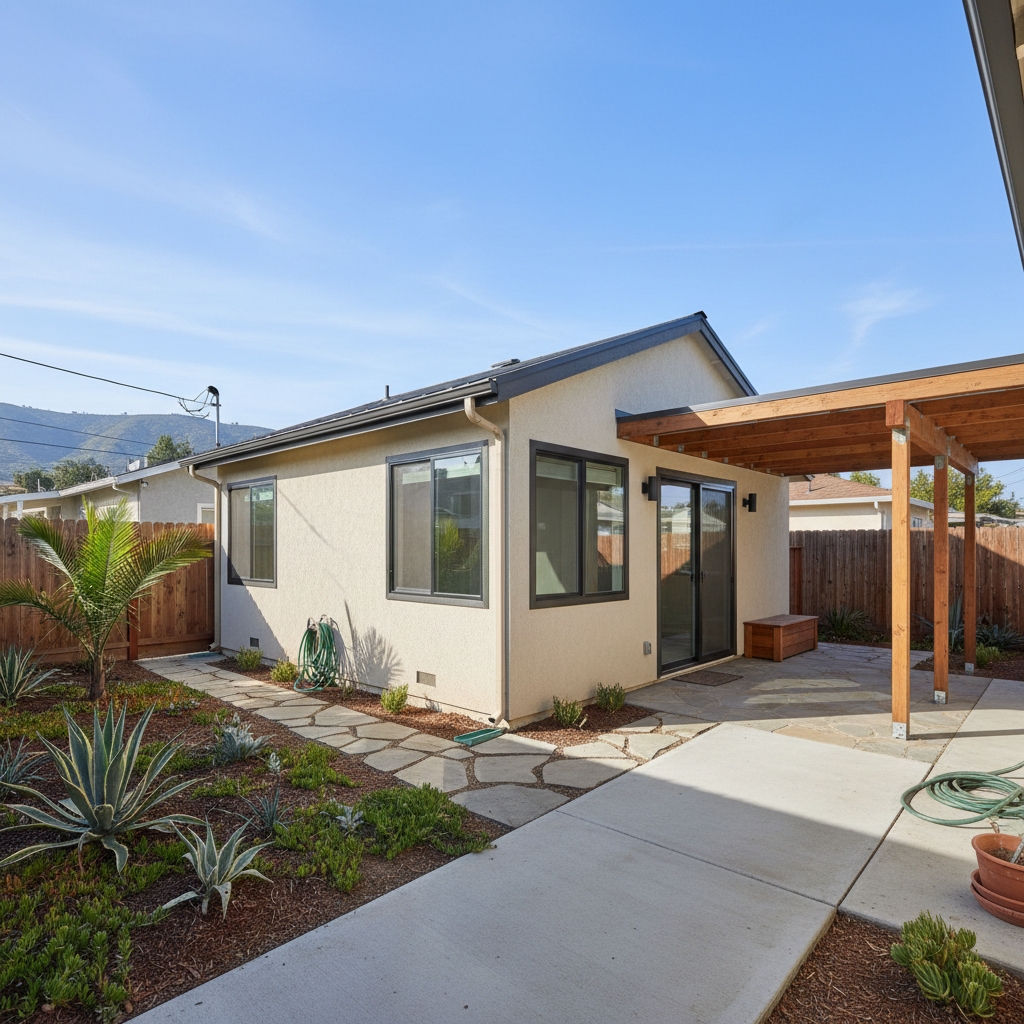
Alright, let's talk about Junior ADU (JADU) costs here in Long Beach. I get asked about this a lot, and frankly, there's a ton of vague info out there. You want to know what you're *really* looking at, right? Not just some "it depends" answer. So, I'm going to lay it out for you, straight from what I've seen on countless projects.
What Exactly Is a JADU? (A Quick Refresher)
Before we dive into dollars, let's just quickly define what we're talking about. A JADU is basically a small, self-contained living unit, usually under 500 square feet, created *inside* an existing single-family home. It's got its own entrance, a kitchen, and a bathroom. The big difference from a full ADU? You don't need extra parking, and it has to be carved out of your main house's existing footprint. Think of it as converting a spare bedroom, a garage, or even part of your living room into a separate rental unit or space for family. Pretty neat, huh?
What Makes JADU Costs Go Up (and Down) in Long Beach?
You're probably thinking, "just give me a number!" I wish it were that simple, but a few key things really push the price around. Here's what I've seen:
- Your Home's Current Layout: This is huge. If you're converting an existing bedroom that already has plumbing nearby (like a shared wall with a bathroom or kitchen), you're going to save a ton on rough plumbing. But if you're cutting into a slab foundation to run new sewer lines across the house? That's a completely different story, and a lot more expensive.
- Condition of Your Home: Older homes, especially those charming Craftsman bungalows in places like Bluff Park or California Heights, often come with surprises. We might open a wall and find old knob-and-tube wiring, or plumbing that needs a full upgrade to meet current code. That definitely adds to the budget. Newer homes, generally speaking, are a bit more predictable.
- Your Finish Choices: This is where you have the most control. Are you going for builder-grade laminate flooring and basic cabinets, or do you want quartz countertops, custom tile work, and high-end fixtures? The difference between a budget-friendly kitchen and a luxury one can easily be tens of thousands of dollars.
- Structural Work: Sometimes, to create that separate entrance or open up a space, you might need to do some structural modifications. Moving load-bearing walls or adding new headers isn't cheap, so be aware.
- Permitting and Design Fees: You'll always have these. Architectural plans, engineering, and city permitting fees in Long Beach aren't negligible. They're a fixed cost you just have to factor in.
Typical JADU Cost Ranges in Long Beach (2024)
Okay, here's the number you've been waiting for. Based on my experience with Infinity ADU and other projects around town, for a JADU in Long Beach, you're generally looking at:
- Budget-Friendly JADU (Basic Finishes): $70,000 - $100,000
This range is for a straightforward conversion with minimal structural changes, using standard-grade materials (think laminate floors, basic cabinets, simple tile, off-the-shelf fixtures). You're likely converting a space that already has some infrastructure nearby, which helps keep costs down. - Mid-Range JADU (Good Quality Finishes): $100,000 - $150,000
This is where most people land. You get nicer cabinets, solid surface countertops (like quartz), better quality flooring, and perhaps a bit more custom tile work in the bathroom. You might have some moderate plumbing or electrical rerouting, or minor structural adjustments, but nothing too wild. - High-End JADU (Premium Finishes & Complexities): $150,000 - $200,000+
If you're going for custom cabinetry, high-end appliances, designer tiles, complex structural changes, or if your existing home throws a lot of curveballs (like needing a full electrical panel upgrade or extensive foundation work), you'll definitely be in this range.
Remember, these are construction costs. They don't typically include things like new furniture or landscaping for the JADU's separate entrance, if you're doing that.
What Should Be Included in a Quote?
When you get a quote from a contractor, don't just look at the bottom line. You need to know what's actually covered. A good, comprehensive quote should break down at least these major categories:
- Design & Permitting: Architectural plans, engineering (if needed), city permit fees.
- Demolition: Removing existing walls, flooring, fixtures.
- Rough Trades: Framing, plumbing rough-in, electrical rough-in, HVAC (if adding/modifying).
- Insulation & Drywall: All new insulation, drywall installation, taping, and texturing.
- Finishes: Flooring, cabinetry, countertops, paint, light fixtures, plumbing fixtures (sink, toilet, shower), appliances (stove, fridge, microwave).
- Exterior Work: If you're adding a new separate entrance, this would include door installation, any small porch or steps, and matching exterior finishes.
- Project Management & Supervision: This covers the contractor's overhead and ensures the project runs smoothly and passes inspections.
- Contingency: A good contractor will usually build in a small contingency (5-10%) for unforeseen issues, especially with older homes.
Make sure the quote specifies brands or quality levels for finishes. "Cabinets" can mean anything from IKEA to custom-built, and the price difference is massive.
How to Avoid Overpaying for Your Long Beach JADU
Nobody wants to get ripped off. Here's my advice:
- Get Multiple Bids: This is standard practice for a reason. Get at least three detailed quotes. Don't just pick the cheapest; compare what's included. A super low bid often means they've left things out or plan to upcharge you later, so be careful.
- Be Specific with Your Vision: The more detailed you are about what you want (e.g., "white shaker cabinets, quartz countertops, LVP flooring"), the more accurate the bids will be. If you're vague, contractors will bid based on their assumptions, which might not match yours.
- Check References & Licenses: Always, always, always check their CSLB license (CGC for general contractor) and ask for references. Call those references. Look up reviews.
- Understand the Contract: Don't sign anything you don't fully understand. Ask questions. Make sure there's a clear payment schedule tied to project milestones, not just arbitrary dates.
- Don't Rush Decisions: Take your time. Don't let anyone pressure you into signing on the spot. A reputable contractor will give you time to review their proposal.
Building a JADU is a big investment, but it can add incredible value to your Long Beach property, whether it's for rental income or multi-generational living. Do your homework, ask the right questions, and you'll be in a good position to make it happen without breaking the bank.